

Concrete Masonry Unit (CMU) in Florida Construction
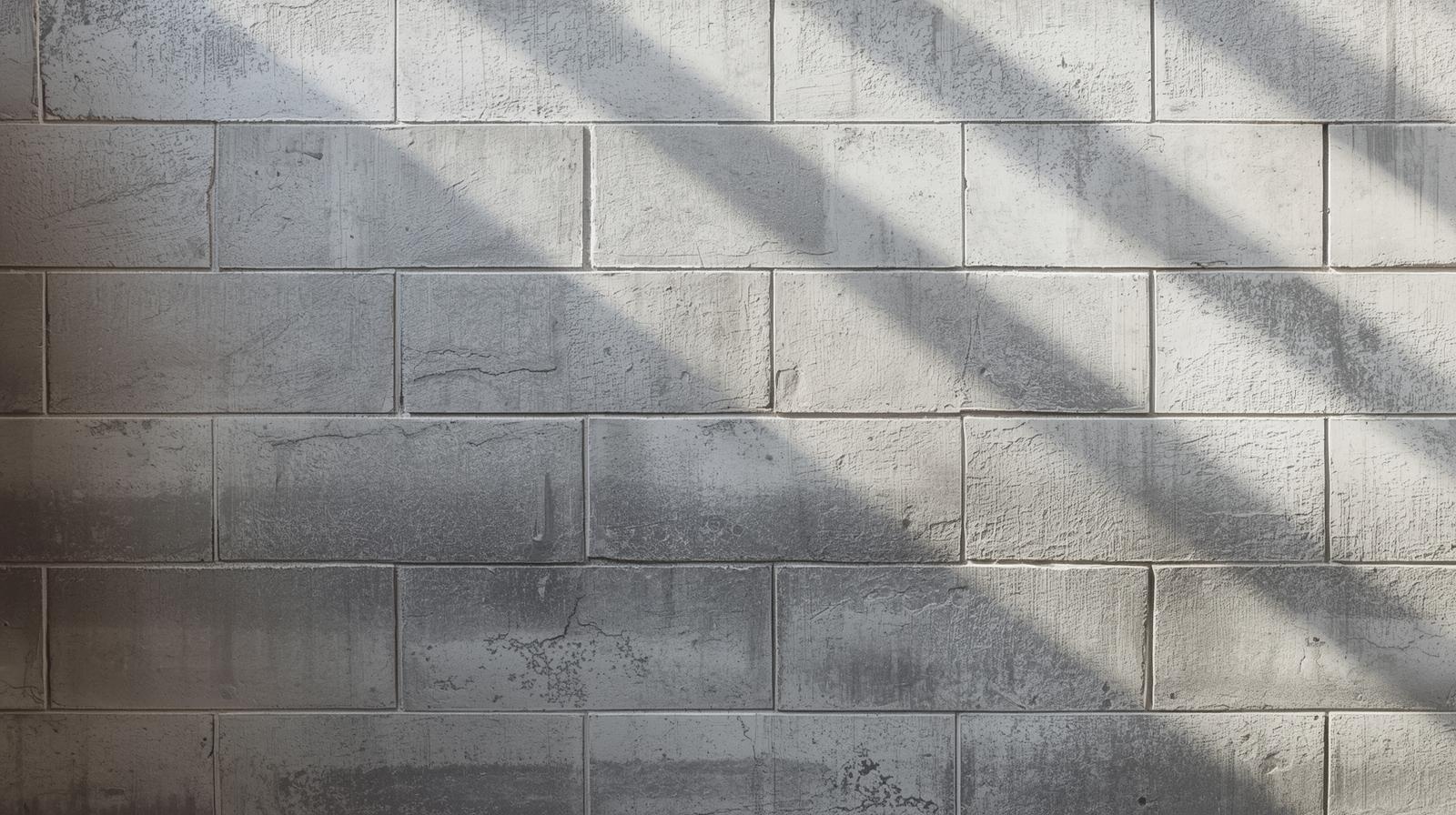
Concrete masonry unit construction for hurricane-resilient buildings in Florida
A concrete masonry unit (CMU) is an engineered pre-cast block (standardized at 8×8×16 nominal dimensions) that serves as the backbone of hurricane-resilient construction. Governed by the Florida Building Code (FBC), load-bearing units must meet a minimum 2,000 psi net area compressive strength (ASTM C90) to withstand cyclonic wind loads. Unlike standard blocks, Florida-grade CMU construction integrates vertical rebar and structural grout into tie columns to create a continuous load path from the roof to the foundation. For architects and designers, specialized finishes like ground-face, polished, and split-face offer aesthetic depth for interior and exterior walls, while modern energy codes require balancing thermal mass with continuous insulation to mitigate heat gain.
For young architects, interior designers, and discerning homeowners undertaking construction projects in Florida, the choice of exterior walls is a choice between compliance, resilience, and long-term financial stability. In this state, the concrete masonry unit (CMU), the familiar concrete block, remains the most prevalent and structurally defensible building material.
Moving past the historical perception of the simple cinder block or utilitarian grey blocks, modern concrete masonry construction relies on engineered, high-performance units and sophisticated structural detailing required by the stringent Florida Building Code (FBC). CMU blocks are used in various construction projects, demonstrating their adaptability to different building types and specific design requirements. This guide breaks down the technical necessities, the range of available products, and the economic realities of utilizing concrete masonry units (CMUs) in the Sunshine State.
Structural Requirements for CMU Construction Under the Florida Building Code
CMUs are used in firewalls and partition walls for fire safety and sound separation in multi-story buildings. In Florida, every concrete masonry wall must be viewed as a critical structural element designed to withstand extreme cyclonic wind loads. The FBC mandates a complete load path from the roof diaphragm through the foundation, which fundamentally changes how load bearing CMU walls are designed and built compared to most conventional CMU construction elsewhere.
Fabricating concrete blocks for structural use requires adherence to ASTM C90, which is the most commonly encountered specification for dry-cast concrete masonry units.
High-Strength Material Requirements
Modern code standards dictate significantly higher minimum strengths to guarantee structural integrity:
CMU Unit Strength: Individual concrete masonry units must be manufactured to meet the latest ASTM C90 standard, requiring a minimum net area compressive strength of 2,000 psi.
Assembly Strength (f'm): The specified compressive strength of the resulting masonry structures (f'm), the value used in engineering design, must often be prescribed at a minimum of 2,000 psi.
Grout and Concrete: The structural grout used to fill the cores and the concrete mix used for tie beams must also achieve a minimum compressive strength of 2,000 psi at 28 days.
The strength of the block itself is derived from its concrete mixture, which includes portland cement and various aggregates. Lightweight blocks utilize lightweight aggregates (under 105 lb/cu. ft.) for better fire protection and sound insulation, while normal weight aggregates are used to create medium weight blocks where maximum structural strength is required for load bearing capacity.
The Reinforced System
The exceptional resilience of concrete masonry walls is not derived from the block alone, but from the integration of steel reinforcement:
Vertical Tie Columns: Vertical rebar is placed inside the hollow cores of the block concrete masonry units, extending from the foundation walls (including basement walls) to the top bond beam. These cores are fully grouted, creating structural elements, or tie columns that provide the necessary tensile strength to resist the suction and pressure from high winds.
Horizontal Reinforcement: Horizontal steel is installed every few courses, spaced not to exceed 18 inches vertically, in the mortar joint or bond beams to increase the bending strength of the wall assembly. For Grade 60 steel, continuous load path integrity requires lap splices of 48 bar diameters.
Selecting CMU Block Types, Sizes, and Architectural Finishes
While the standard concrete block sizes adhere to nominal dimensions of 8 × 8 × 16 inches (and actual dimensions of 7⅝ × 7⅝ × 15⅝ inches), the true design potential of concrete masonry units lies in the vast array of specialized units available from local manufacturers. These CMU shapes are essential for both structural elements and achieving specific architectural visions for interior and exterior walls.
Standard and Specialty Blocks
Beyond the basic hollow unit for standard CMU walls and partition walls (where non load bearing walls can utilize 4″ or 6″ series blocks), specialized units are critical for detailing and reinforcement:
| Block Type | Function/Application |
|---|---|
| Header Block | Designed with a ledge to support masonry veneer or shelf angles, often used at floor lines. |
| Cut Lintel / Solid Bottom Lintel | Used above door or window openings. The solid bottom lintel provides superior structural continuity and is a key structural element. |
| Pilaster Block | Specifically designed units to form reinforced columns, necessary where vertical steel (rebar) needs to be concentrated to handle high loads. |
| Bullnose Block | Features rounded corners, commonly used at wall edges or openings for a softer, more finished look. |
| Half and Half-High Blocks | Necessary to maintain bond patterns and structural alignment at corners and vertical breaks. |
| Inspection Block | Units designed to be temporarily removed, allowing inspectors to check rebar placement and grouting compliance before the pour. |
Architectural Concrete Masonry Units
For architectural concrete masonry units, the focus shifts to aesthetic appeal and texture, often used on decorative exterior walls, retaining walls, and garden walls. These units are created during the manufacturing process by manipulating the concrete mix and using various finishing techniques:
Split-Face: Created by mechanically splitting the blocks after curing, resulting in a rough, natural, very rough texture that resembles natural stone-like texture.
Ground Face CMU: This finish is achieved by polishing or burnishing the block to reveal natural aggregates, resulting in a smooth, refined surface that highlights the color and texture of the aggregates.
Polished CMU: Polishing exposes aggregates for a smooth, highly refined, and gleaming appearance, offering a luxurious finish compared to ground face, glazed, or split-faced units.
Glazed CMU: A type of concrete masonry unit with a resin-based, tile-like glazed finish. Glazed CMU offers a wide range of aesthetic options, enhanced resistance properties, and compliance with various standards. Decorative finishes can include faux material patterns that mimic the appearance of other materials, providing visual interest and versatility without the cost or authenticity of real materials.
Split-Rib (Scored or Ribbed blocks): Units featuring intentional indentations, ribs, or patterns for added texture. These blocks often have vertical rake marks introduced during the molding process, creating a distinctive textured surface that distinguishes them from other finishes.
Spec-Brik® / Concrete Brick: Smaller concrete brick units designed to offer the look of brick while maintaining the durability and structural properties of CMU.
How Concrete Masonry Units Are Manufactured and Prepared for Construction
The journey of concrete masonry units (CMUs) from plant to project is a testament to precision engineering and material science. The process begins with the careful selection of construction materials, primarily portland cement, aggregates like sand, gravel, or crushed stone, and water. These ingredients are blended into a consistent concrete mixture, which forms the backbone of every CMU's structural strength and durability.
Once the concrete mixture is prepared, it is poured into specialized molds that define the nominal dimensions—most commonly 8 × 8 × 16 inches—of the finished block. The actual dimensions are slightly less, ensuring a precise fit within wall assemblies. This molding process is highly automated in modern plants, ensuring each block meets strict standards for size, shape, and density. Vibration is used to eliminate air pockets, resulting in a dense, uniform product that is both strong and easy to handle on site.
After molding, the blocks are carefully cured in a controlled environment. This curing phase is critical: it allows the concrete to reach its full strength and ensures the finished CMUs are ready to withstand the rigors of construction and Florida's demanding climate. Once cured, each block is inspected for quality and consistency before being packaged for delivery to construction projects across the state.
One of the standout features of architectural concrete masonry units is the variety of surface finishes available. Through different manufacturing techniques, CMUs can be produced with ground face, polished, or glazed finishes, as well as natural stone-like texture achieved through split-face or ribbed blocks. These options allow architects and designers to specify exterior walls, interior walls, and even garden or retaining walls that combine structural performance with aesthetic appeal.
Versatility in Construction
CMUs are engineered for versatility. They are used in everything from load bearing walls and foundation walls to non load bearing walls, partition walls, and complex wall assemblies in commercial buildings. Their compatibility with other construction materials, such as steel beams, enables the creation of robust structures that meet both design and performance requirements. The precision of the manufacturing process ensures that each block fits seamlessly into the overall assembly, supporting construction efficiency and reducing on-site waste.
Sustainability Advantages
Sustainability is another key advantage of modern concrete masonry. Many CMUs incorporate recycled materials, such as fly ash or crushed stone, reducing the environmental impact of new construction. Their inherent thermal mass and the ability to integrate continuous insulation contribute to improved energy efficiency and lower energy costs over the life of the building. At the end of their service life, CMUs can be recycled, further minimizing their environmental footprint.
Energy Performance of CMU Walls in Florida's Climate
While CMU excels in durability, it performs poorly regarding energy efficiency without supplemental measures. The sheer density of the concrete results in a low inherent R-value and significant heat conduction, leading to high energy costs if not properly addressed.
Florida's Energy Conservation Code (FLEC) requires mass walls in Climate Zone 2 to meet a maximum U-factor of 0.65. Achieving this requires mitigating the two primary thermal challenges:
Low Inherent R-Value
Standard CMU typically offers an R-value between R-4 and R-14. Core fill insulation, where foam or granular fill is injected into the cores, is a common solution. However, this is constrained by the required structural reinforcement.
Thermal Bridging
The fully grouted structural elements (tie columns and bond beams) are highly conductive thermal bridges. Even foam-insulated walls that require structural grouting (e.g., at 48-inch intervals) can see their effective R-value significantly reduced, sometimes to R-7.3 or lower for an 8″ wall, depending on the CMU density and web count.
The Continuous Insulation Solution
For designers targeting high energy performance and maximizing thermal mass benefits, continuous insulation (Ci) applied to the exterior face of the concrete masonry is often the most effective strategy. Ci wraps the entire structure, eliminating the thermal bridges created by the structural grouting and ensuring a high-performance wall assembly.
The Long-Term Value of CMU Construction in High-Wind Regions
For young professionals and homeowners prioritizing resilience, CMU is a powerful foundation. The decision to use concrete masonry unit (CMU) is an investment in longevity, storm resistance, and reduced maintenance from termites and rot.
Cost Considerations
While the initial installed cost of CMU walls (typically ranging from $12.00 to $22.00 per square foot for exterior walls including labor and materials) is often higher than that of wood-frame construction, this represents an engineering premium. Architects must look past the initial block bid and recognize that the true cost—the whole-wall cost—must account for the mandatory rebar, specialized structural shapes, and the necessary continuous insulation required for modern FBC compliance.
By specifying high-strength blocks, detailing proper reinforcement (utilizing two units of block if necessary for complex corners or columns), and designing a robust insulation strategy, you ensure the CMU home achieves both structural integrity and long-term operating efficiency.
Key Benefits of CMU in Florida
- Hurricane Resistance: Engineered to withstand extreme cyclonic wind loads when properly reinforced
- Fire Protection: Non-combustible material provides excellent fire ratings
- Termite Resistance: Unlike wood-frame construction, CMU is impervious to termite damage
- Longevity: Properly constructed CMU walls can last for generations with minimal maintenance
- Sound Insulation: Dense mass provides excellent acoustic separation
- Design Flexibility: Wide range of architectural finishes for both interior and exterior applications
FAQs
About CooperBuild Team
CooperBuild's team brings expertise in construction materials and building systems for residential and commercial projects.
Construction & Materials Specialists
Subscribe to Our Newsletter
Get the latest insights, trends, and news from the construction industry delivered straight to your inbox.
We respect your privacy. Unsubscribe at any time.